

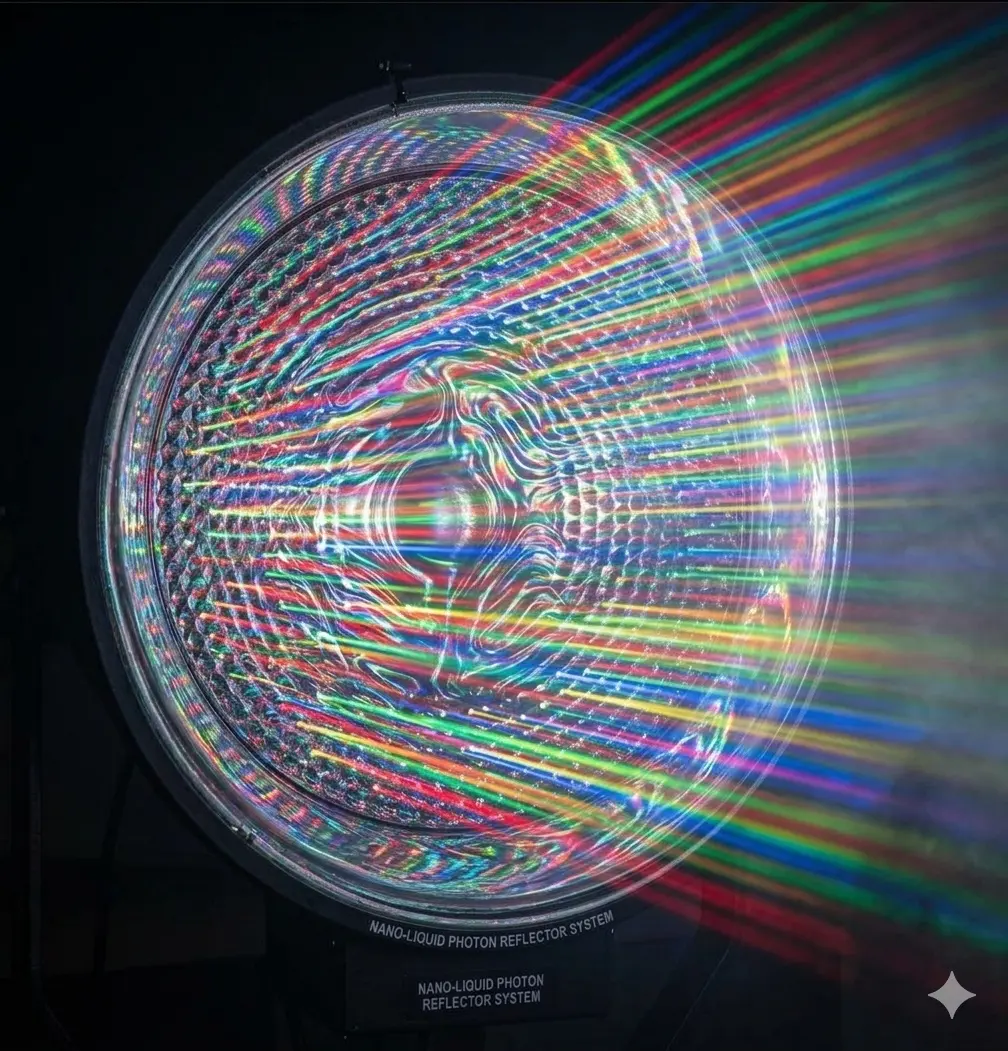

Nano Grow Light is a horticultural technology company developing Nano Liquid Photonic Coating™, an engineered optical reflector technology intended to manage photon distribution and canopy illumination in indoor growing systems.
The Nano Grow Light horticultural lighting system is a commercial implementation of this reflector technology. Its current configuration uses a 250W ceramic metal halide (CMH) lamp as the light source. The reflector technology—not the lamp—is the company’s primary innovation.
Performance values published on this site are manufacturer-reported unless identified otherwise. Visit the Research & Evidence Center for methods, data availability, visual evidence, and validation status.
A reflector changes the direction and distribution of light emitted by a source; it does not create photons. Nano Liquid Photonic Coating™ is the reflector technology evaluated in Nano Grow Light systems.
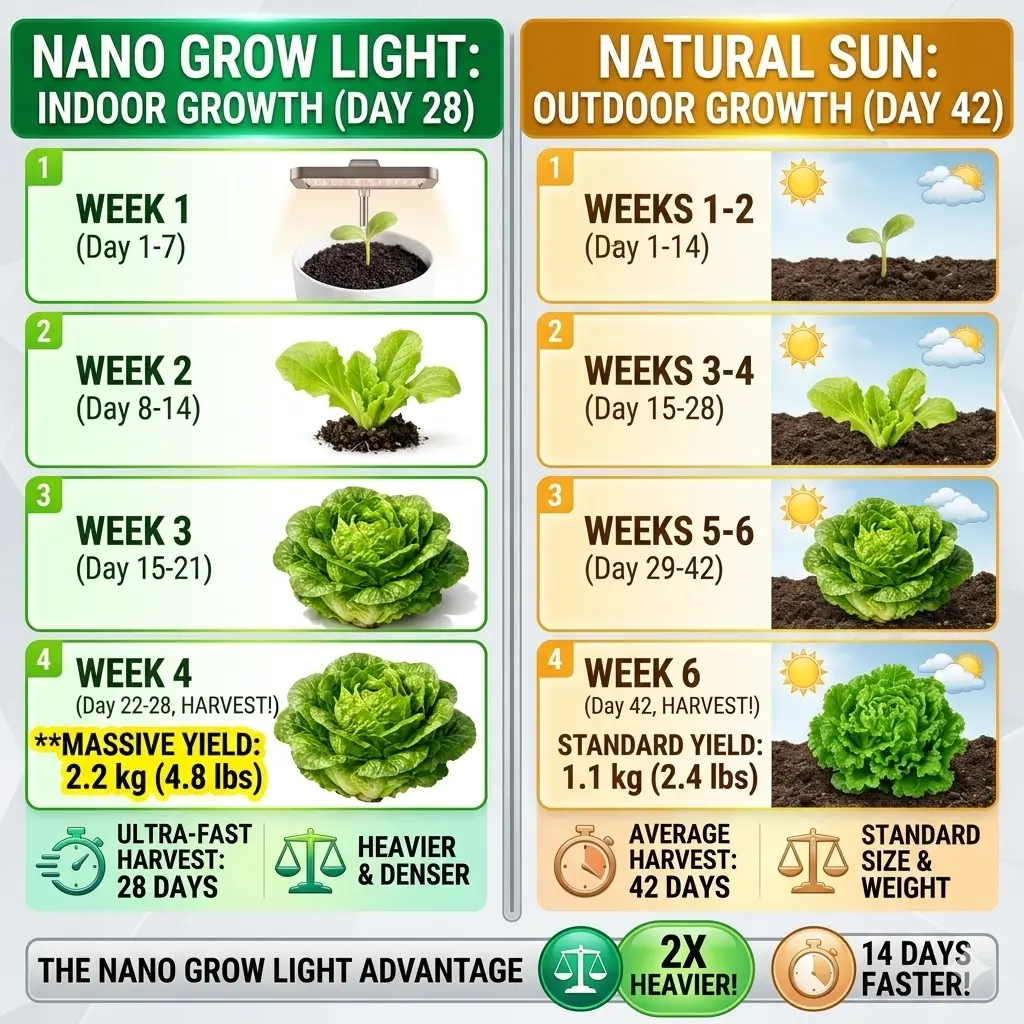
Reflectance measurements and canopy-level PPFD maps describe different properties. A point-level PPFD change does not by itself establish greater total fixture output or a crop-yield increase. See the Technical Specification Sheet for reported measurements and the Testing Methodology for measurement conditions.
Nano Liquid Photonic Coating™ is described by Nano Grow Light as an engineered treatment applied to the reflector surface. The reflector redirects light from the lamp toward the growing area.
The company evaluates this function through reflectance analysis, PPFD mapping, spectral measurements, and thermal observations. The methods page explains how measurements were reported and what source files are currently available.
These measurements characterize the system under stated conditions; they should not be treated as proof of crop outcomes outside a documented crop trial.
Nano Grow Light reports a 36-month program in four indoor grow rooms of 2,000 sq ft each in Mammoth, California. The reported lighting schedule was 20 hours on and 4 hours off while operating. The company reports eight harvests per room per year—32 room-harvests per year across the four rooms. Grow operations shut down during the heavy winter months. The company also reports approximately 200 reflector deployments per room, or approximately 800 deployments overall.
Program-wide harvest total not confirmed: the 32 figure is the reported annual room-harvest count, not a confirmed 36-month total. Dated room and harvest logs are needed to establish the total across the program and document the winter shutdown periods. These are manufacturer-reported scope figures and do not by themselves establish crop-performance outcomes.
Read the Nano Liquid Photonic Coating™ Research & Evidence Center for the scope summary, and review Testing methodology and measurement conditions and the Testing data repository and file availability for methods and source-file status.