
If you’ve ever felt a wave of heat standing under a grow light, you already know fixture technology matters. This LED vs HID grow lights heat comparison (plus CMH) breaks down what each fixture radiates, so you know what it means for your grow room’s temperature, humidity, and watering schedule.
LED vs HID Heat Output: Why It Matters
Excess heat from a grow light forces plants to transpire faster, which increases watering frequency. It can also scorch leaves that sit too close to the fixture. It also raises ambient room temperature. Growers in small tents or enclosed spaces often need extra ventilation or air conditioning to compensate. That adds to the real cost of running the light.
HID and Metal Halide: The Traditional Standard
Growers have used high-intensity discharge (HID) and metal halide fixtures in horticulture for decades because of their strong output. But they run hot. These fixtures release a significant share of their electricity as radiant heat rather than usable light. That’s why growers using them typically need to hang fixtures further from the canopy. It also means investing in dedicated exhaust or cooling systems.
Ceramic Metal Halide (CMH)
CMH lights are a more efficient evolution of metal halide technology. They run somewhat cooler while offering a fuller spectrum. They still generate meaningfully more heat than LED fixtures of comparable output. Ventilation planning still matters, just less urgently than with older HID setups.
LED Grow Lights
LED fixtures convert a much larger share of their electricity into usable light rather than heat. That’s why growers can often hang modern LED grow lights closer to the canopy without scorching leaves. This also means smaller grow spaces need less supplemental cooling, which reduces both equipment costs and ongoing electricity use.
LED vs HID Grow Lights Heat: Comparing Real-World Numbers
When comparing fixtures, ask for surface or canopy-level temperature at the manufacturer’s recommended hanging height. Don’t rely on wattage alone. Wattage only tells you about power draw, not how much of that power becomes heat versus usable light. Two fixtures with identical wattage can produce very different amounts of heat depending on their underlying technology and design. For more background on how different lighting technologies work, see this overview of grow lights.
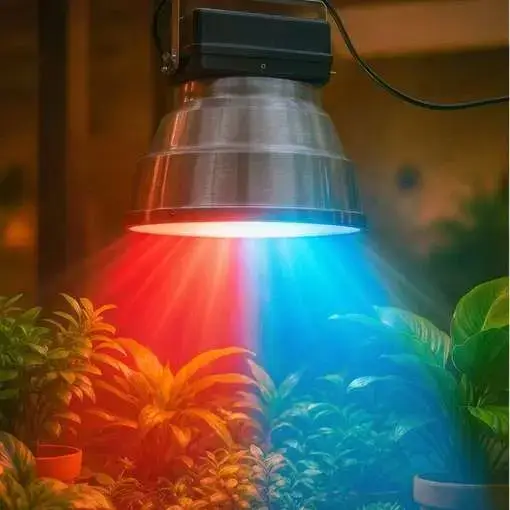
What This Means for Your Grow Space
If you’re growing in a small tent, a spare closet, or any space with limited airflow, heat output matters. Weigh it as heavily as spectrum or coverage area when buying. Lower-heat fixtures reduce the need for extra ventilation equipment. They also make it easier to maintain a stable environment for sensitive seedlings and flowering plants alike.
Want cooler-running light without sacrificing intensity? Shop Nano Grow Light fixtures engineered to run cooler than HID and metal halide setups.